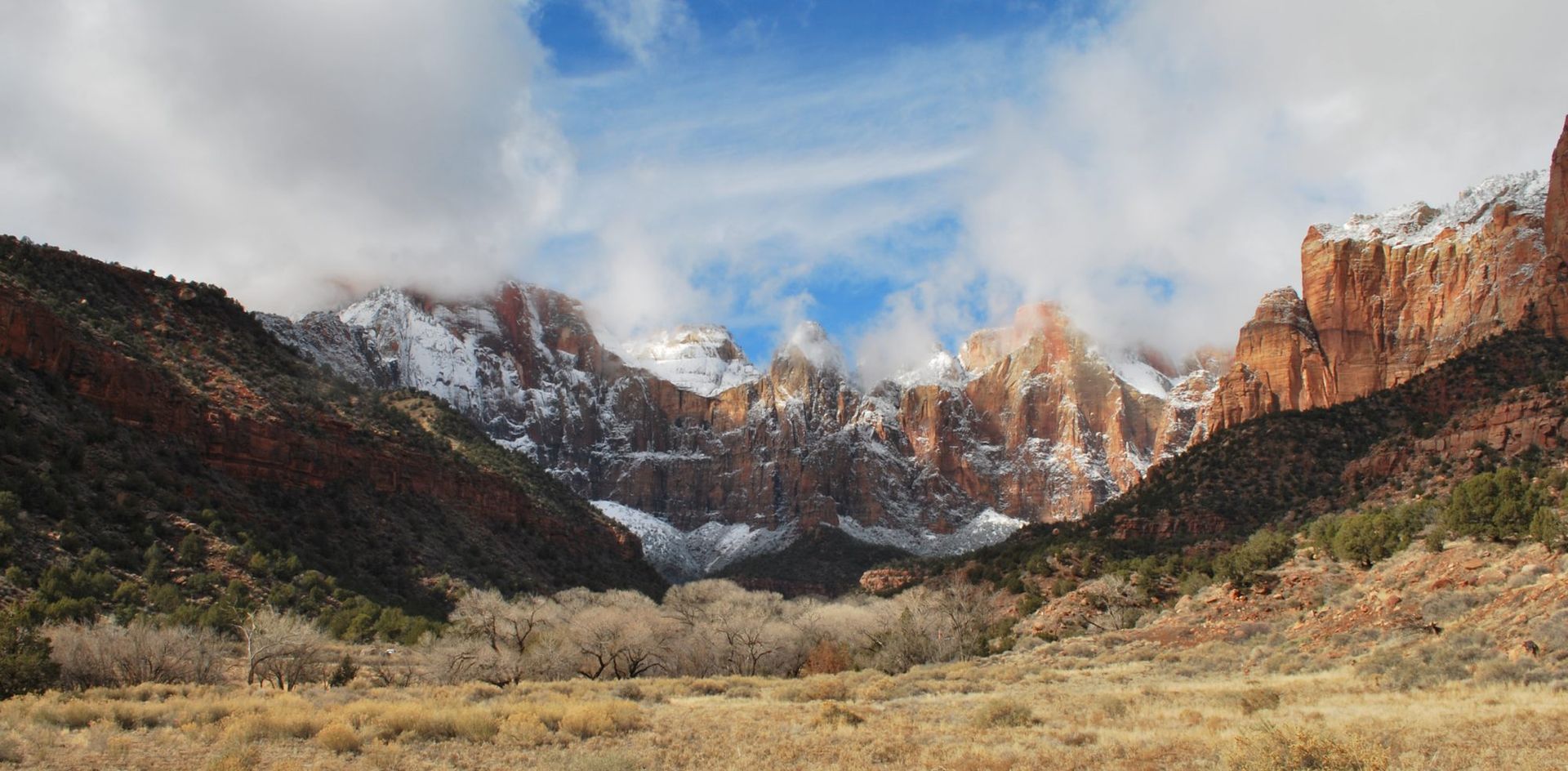
Fresh snow on the Towers of the Virgin in Zion Canyon. (NPS photo / Sarah Stio)
Winter is Zion's best-kept secret. The summer crowds are gone, the heat is gone, and on a clear morning you might see a dusting of snow on red sandstone cliffs. But winter also changes how the park works: the shuttle schedule shifts, some roads close, and a few famous hikes need extra planning. Here's what you need to know to plan a great winter trip, and where to rest up warm at night.
What the weather is really like
What the weather is really like
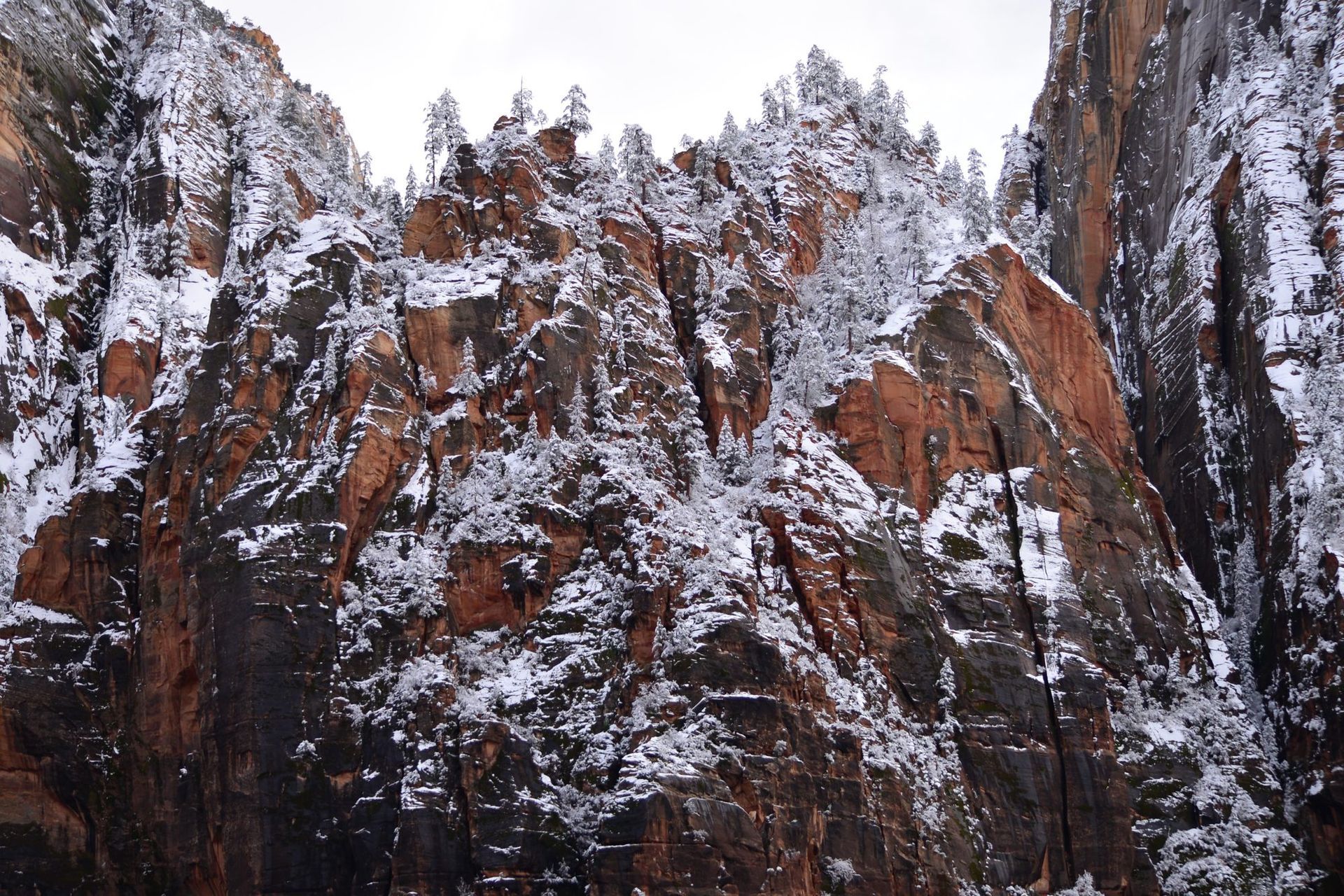
Snow-frosted cliffs near the Great White Throne in Zion Canyon. (NPS photo / Cadence C. Cook)
According to the National Park Service, winter daytime temperatures in Zion Canyon typically range from about 30°F to 60°F. Nights are much colder, and the park notes that day and night temperatures can differ by more than 30°F. Pack layers: a warm jacket, hat and gloves for mornings, and lighter layers for a sunny afternoon hike. Higher areas of the park, like the East Entrance and Kolob, run colder and are more likely to see snow and ice.
The shuttle and driving the Scenic Drive
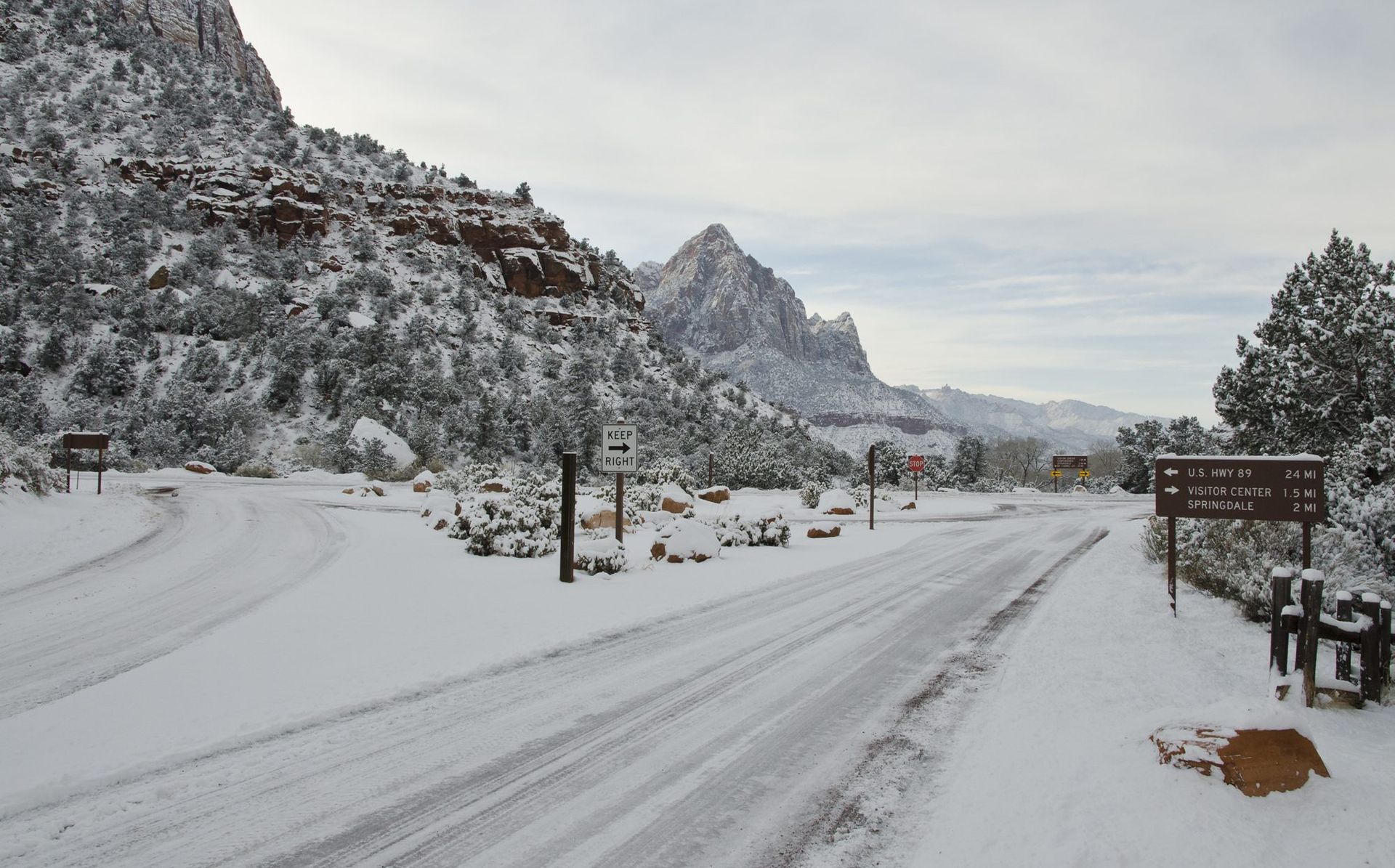
Snow on the road at Canyon Junction, where the Zion Canyon Scenic Drive begins, on New Year’s Day. (NPS photo / Sierra Coon)
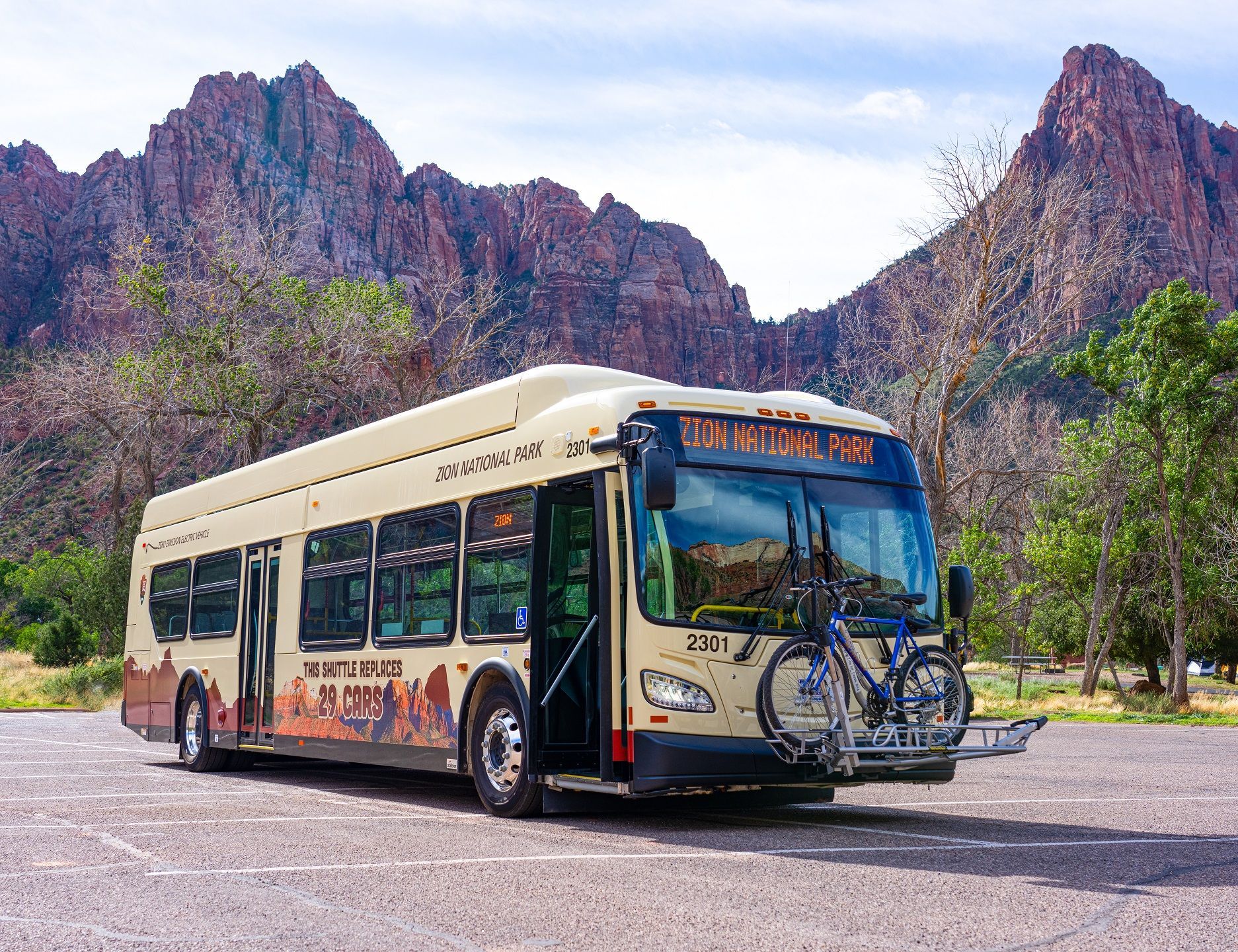
For most of the year, Zion Canyon Scenic Drive is open only to the free park shuttle. Winter is different. Here's the current NPS schedule:
- October 25 to November 28: Shuttles run, with the first one leaving the Zion Canyon Visitor Center at 7:00 am and the last at 5:00 pm.
- November 29 to December 25: No shuttle service.
- December 26 to January 2: Holiday shuttle service, roughly 8:00 am to 4:30 pm from the Visitor Center.
When the shuttle isn't running (usually December through February, outside the holiday week), you can drive your own car up the Scenic Drive. That's a rare treat, since you can stop at Court of the Patriarchs, Zion Lodge, and the Temple of Sinawava on your own schedule. Parking is limited, though, and the Park Service may temporarily close the road when lots fill up, so arrive early. Always check the NPS shuttle page before you go, because schedules can change.
Angels Landing permits in winter
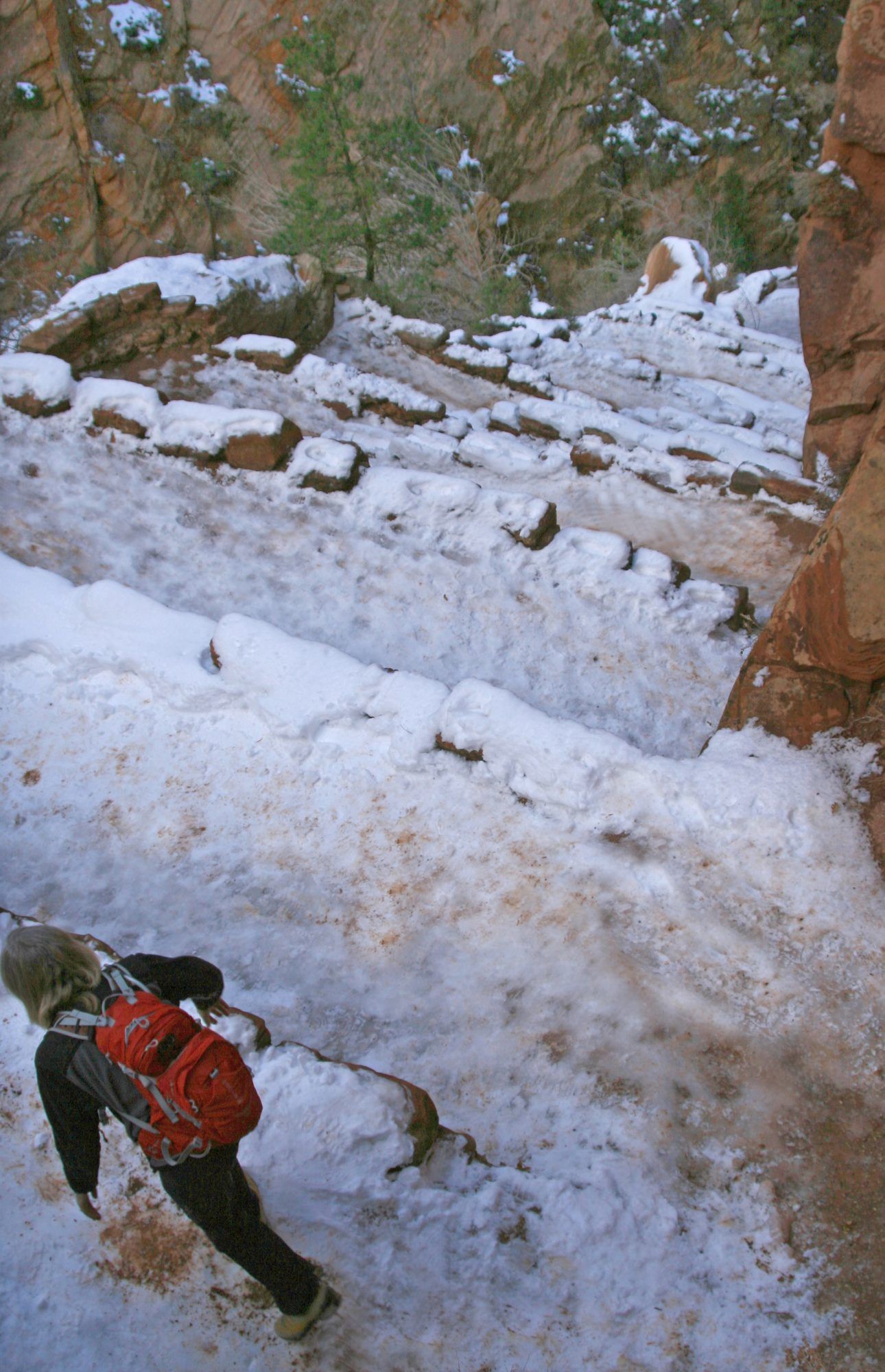
A hiker climbs a snowy Walter’s Wiggles, the switchbacks on the West Rim Trail to Angels Landing. (NPS photo)
Angels Landing requires a permit all year, including winter. The seasonal lottery for December 1 through February 28 hikes ran October 1–20, so if you missed it, use the day-before lottery on recreation.gov. It opens at 12:01 am and closes at 3:00 pm Mountain Time the day before your hike. Applying costs $6 (covering up to six people), and if you win, the permit is $3 per person. In winter, the chains section can be icy, so check trail conditions with a ranger and turn back if it doesn't feel safe.
The Narrows in winter
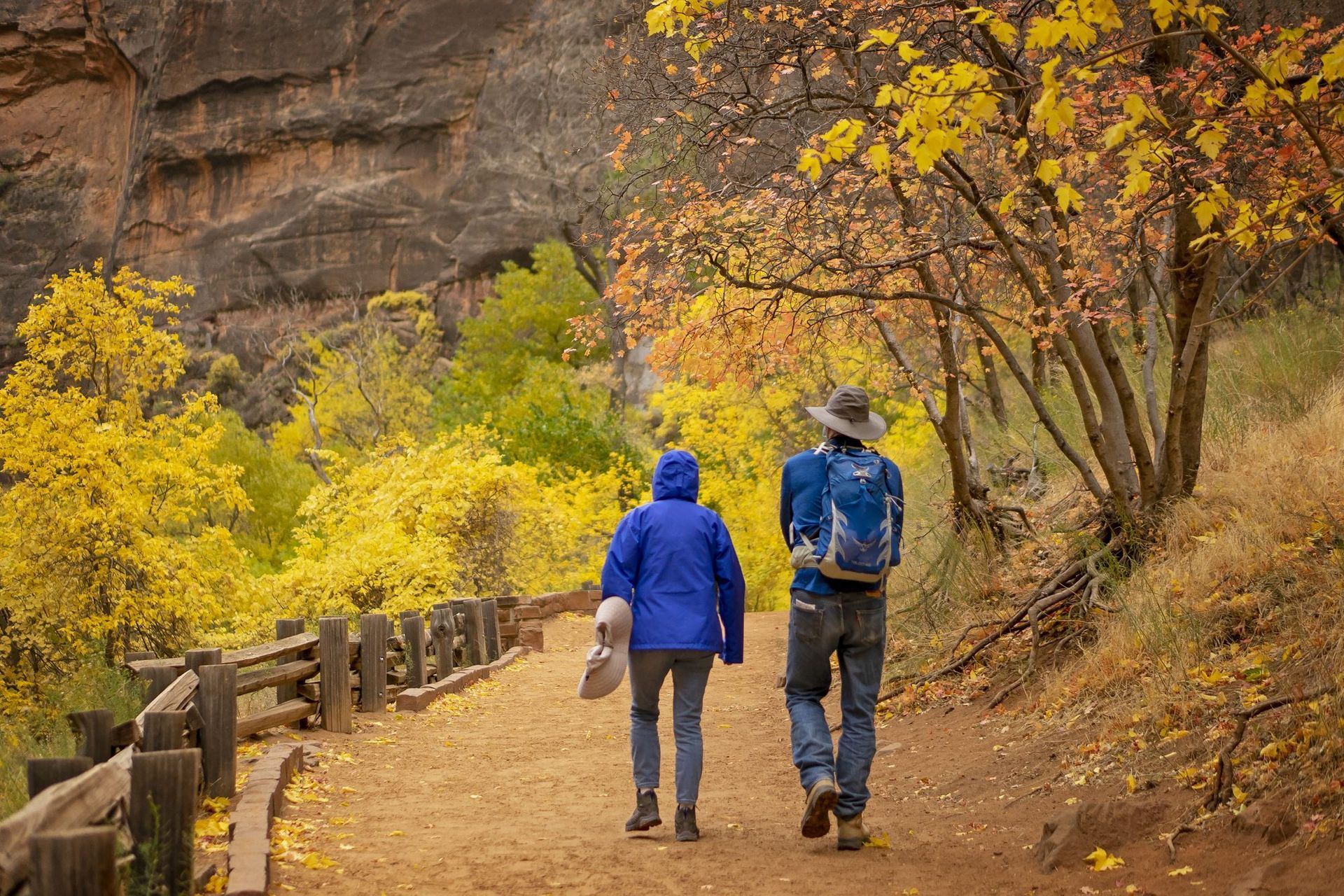
Hikers on the Riverside Walk in fall. This paved trail ends where the Narrows begin. (NPS photo)
The Narrows is open in winter when conditions allow, but the NPS warns that winter and early spring commonly bring high, cold water. The Narrows closes to all travel when the Virgin River flows above 150 cubic feet per second, and whenever the National Weather Service issues a flash flood warning. If you go, rent proper cold-water gear (drysuit or wetsuit setups) from an outfitter in Springdale, check the river flow and flash flood forecast that morning, and talk to a ranger at the Visitor Center.
Easy winter hikes that are still great
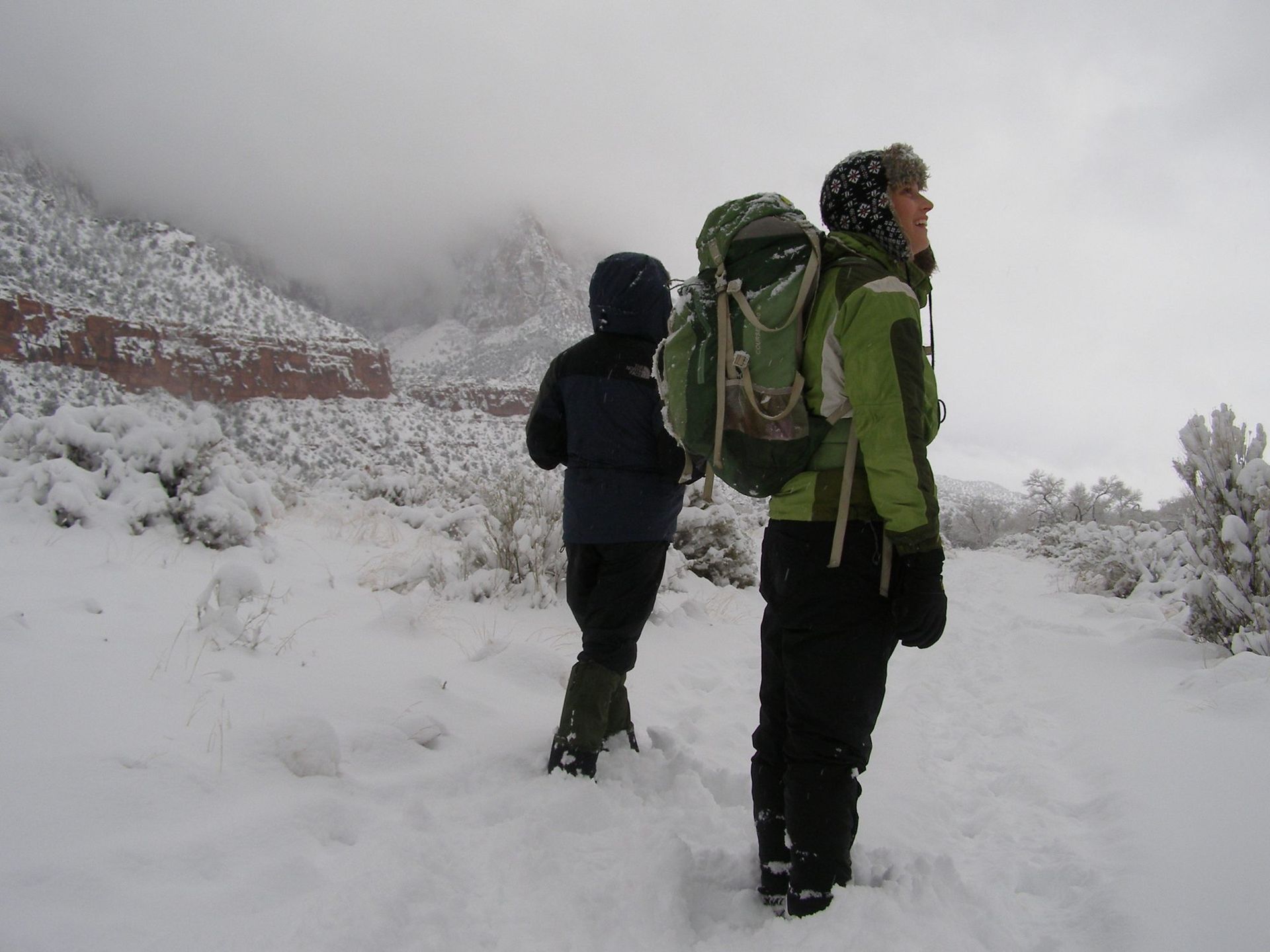
Hikers on the Pa’rus Trail during a snowstorm. (NPS photo)
Not every winter day needs a big summit. The Pa'rus Trail is a flat, paved path that follows the Virgin River from the Visitor Center. It's also the only trail in Zion that allows pets (on a 6-foot leash) and bicycles. With your car able to reach the canyon in the non-shuttle season, the Riverside Walk at the Temple of Sinawava and the short Canyon Overlook Trail near the East Entrance are popular choices for a half day. Shaded trails can hold ice long after a storm, so traction devices (microspikes) are worth packing.
Roads that close in winter
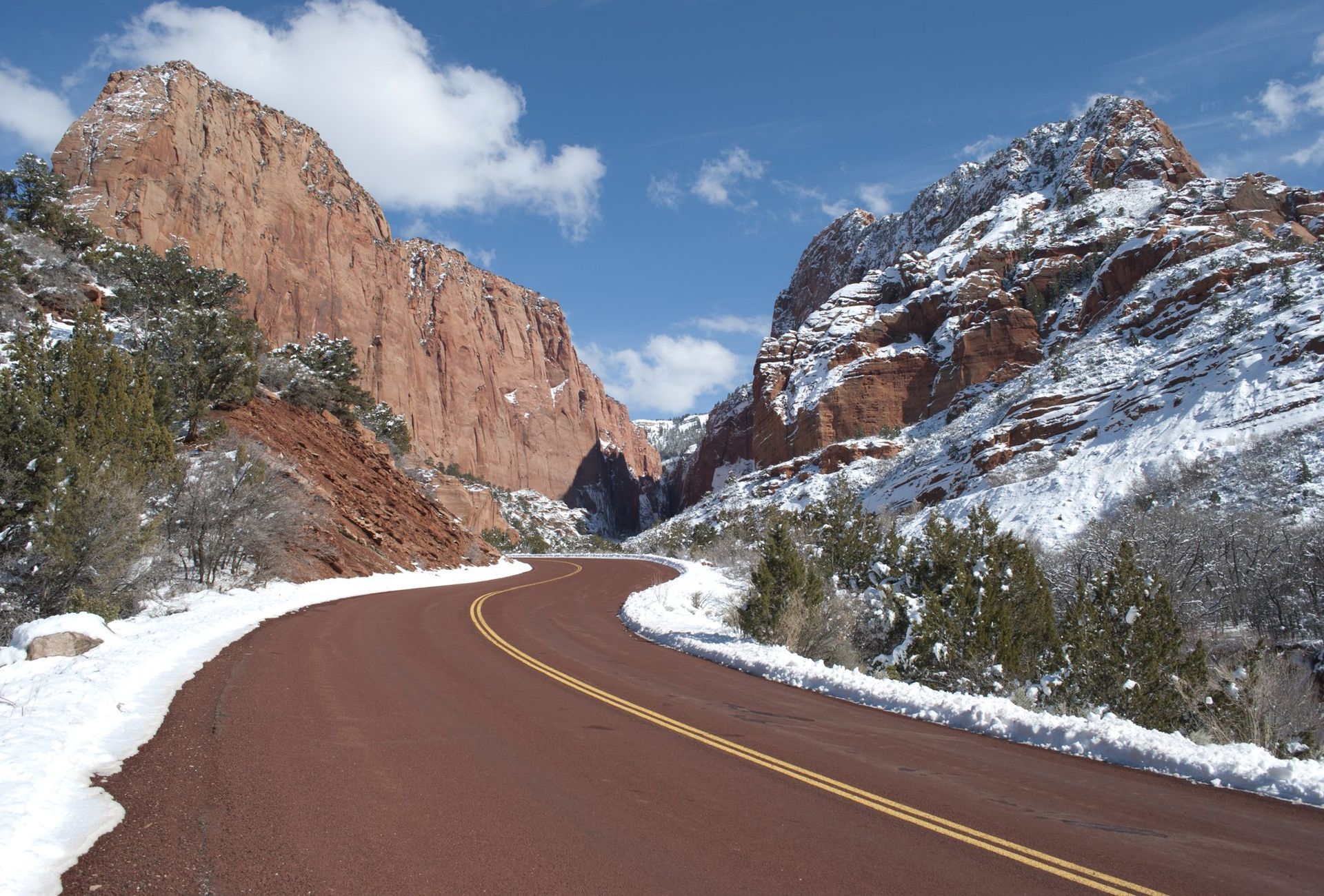
Kolob Canyons Road after a winter storm. (NPS photo)
- Zion–Mount Carmel Highway (the tunnel road to the East Entrance): The Park Service works to keep it open year-round, but it can close for snow, ice, or rockfall. Large vehicles over the posted size limits can't drive between Canyon Junction and the East Entrance at all, so check the NPS large-vehicle page if you're in an RV or towing.
- Kolob Canyons Road (Exit 40 off I-15): Open most of the year but closes frequently in winter.
- Kolob Terrace Road: Usually closes for several months from fall into spring because of snow.
For current closures, check the alerts on the NPS Current Conditions page, or call UDOT road info at 866-511-8824.
Entrance fees
A standard Zion entrance pass costs $20 to $35 depending on how you enter, and it's good for seven days. Non-U.S. residents age 16 and over now pay an additional $100 per person unless they enter with an Annual or America the Beautiful pass. An annual pass can pay for itself quickly if you're also visiting Bryce Canyon or the Grand Canyon on the same trip.
Where to stay: a warm tent and a quiet canyon
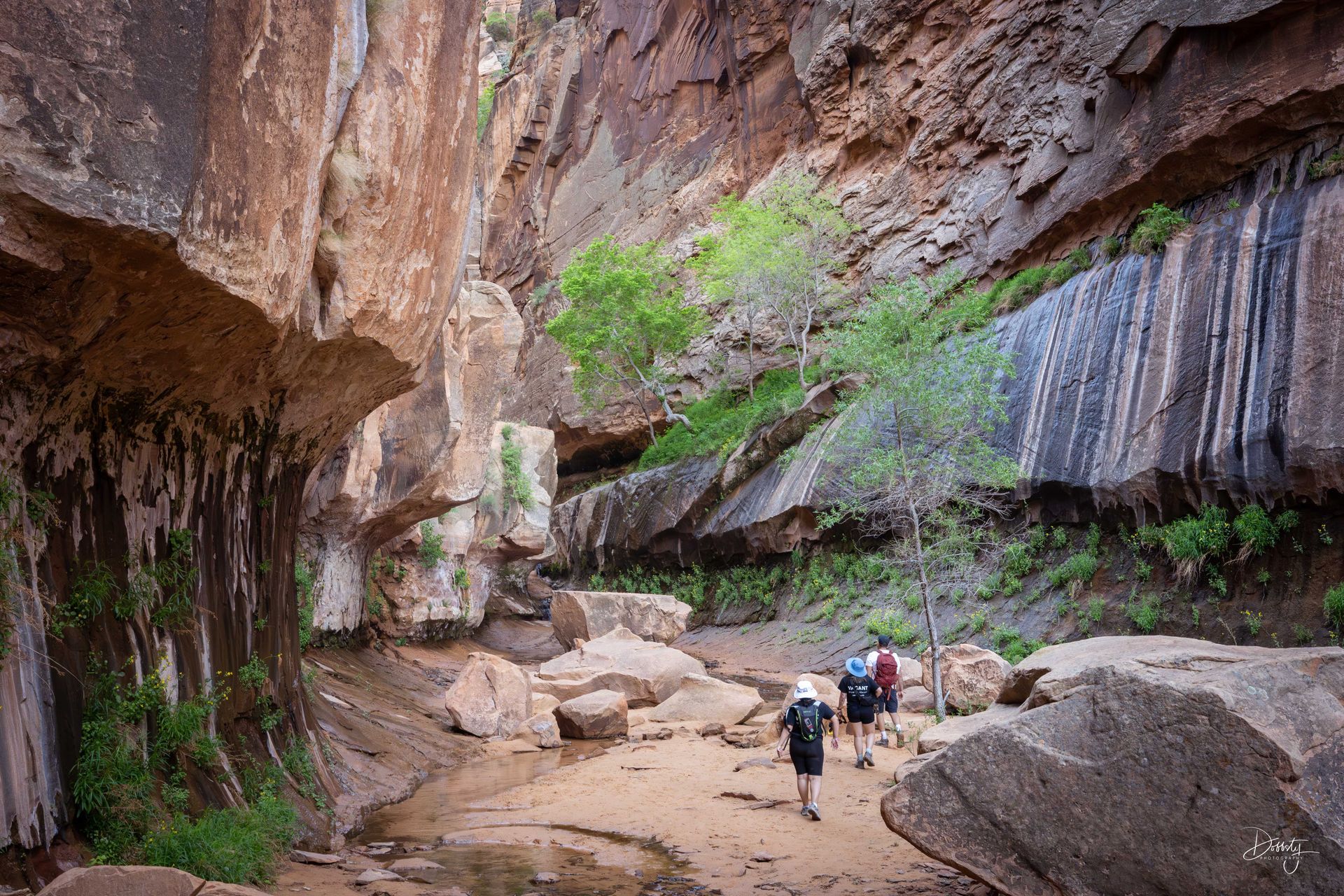
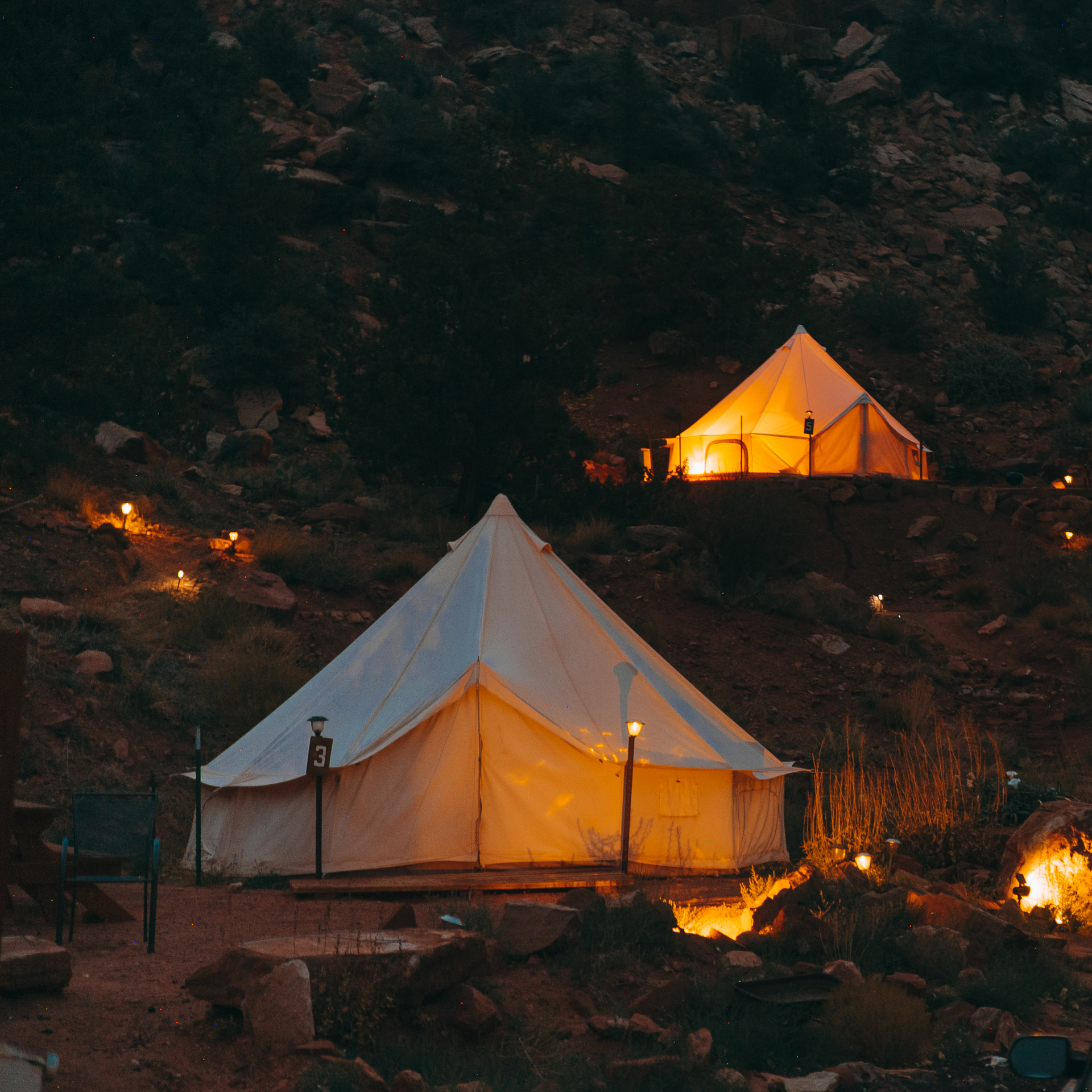
After a cold day on the trail, you want a warm bed and a quiet night. Zion Glamping Adventures sits at the mouth of Water Canyon in Hildale, Utah, roughly an hour's drive from Zion's south entrance in Springdale. Our tents are heated and have real beds, so winter nights are cozy, and the desert sky out here is dark and full of stars. On your rest day, the Water Canyon trailhead is just about 1.5 miles from camp, with sandstone cliffs, arches, and hanging gardens and none of the park crowds.
Winter weekday deal: Book directly on our website and get 33% off every Sunday–Thursday night in our tents with a 3-night minimum, through February 28.